

Slot games are among the easiest casino games to understand, but their technology and mechanics can be more complex than they first appear. A player usually selects a bet, starts the game, and watches the reels spin. When the reels stop, symbols appear in different positions, and the game checks whether they form a winning combination based on its rules.
Modern slot games use a random number generator (RNG) to determine game results. This means each spin is generated independently rather than being based on previous spins. Different slots can also include features such as paylines, wild symbols, scatter symbols, bonus rounds, free spins, and multipliers. These features make each game different and can change how wins are calculated.
Understanding how slot games work can help players read game rules and recognize important terms before playing. This guide explains the basic mechanics behind slot games, including reels, symbols, paylines, RNGs, payouts, bonus features, and return-to-player concepts. Whether you are new to slots or simply curious about the technology behind them, learning these basics makes the experience easier to understand.
What Are Slot Games?
Slot games are digital or mechanical games that use spinning reels with symbols. When the reels stop, matching symbols on winning lines may create a payout according to the game’s rules. Modern online slots are software-based and use random number technology rather than physical mechanics.
Common features include:
- Multiple reels and paylines.
- Bonus symbols and free spins.
- Wild and scatter symbols.
- Different themes such as adventure, mythology, sports, and fantasy.
- Various betting options depending on the game.
Although every game has unique features, the basic objective remains the same: the game randomly determines the result after each spin.
Understanding Random Number Generators (RNG)
An RNG, or Random Number Generator, is the core technology behind modern slot games. It continuously generates random numbers every second, even when nobody is playing.
When a player presses the spin button:
- The RNG instantly selects a random number.
- That number corresponds to a specific symbol combination.
- The reels display the selected result.
- Previous spins do not affect future outcomes.
- Every spin is independent of all others.
Because of this system, there is no reliable way to predict or control the next result.
What Is Return to Player (RTP)?
Return to Player (RTP) is a theoretical percentage that estimates how much money a game returns to players over a very large number of spins.
For example:
- A game with a 96% RTP theoretically returns $96 for every $100 wagered over millions of spins.
- RTP is calculated over long periods, not individual gaming sessions.
- Short-term results can vary significantly.
- RTP does not guarantee personal winnings.
- Different games may have different RTP values.
Understanding RTP helps players compare games, but it should never be viewed as a prediction of future outcomes.
What Does Volatility Mean?
Volatility describes how often and how large payouts may occur.
Low volatility games generally:
- Produce smaller wins more frequently.
- Offer steadier gameplay.
Medium volatility games:
- Balance win frequency and payout size.
High volatility games:
- May produce fewer winning spins.
- Can include larger payouts, although they occur less often.
Volatility is about risk and reward, not about whether a game is “better.”
Paylines and Winning Combinations
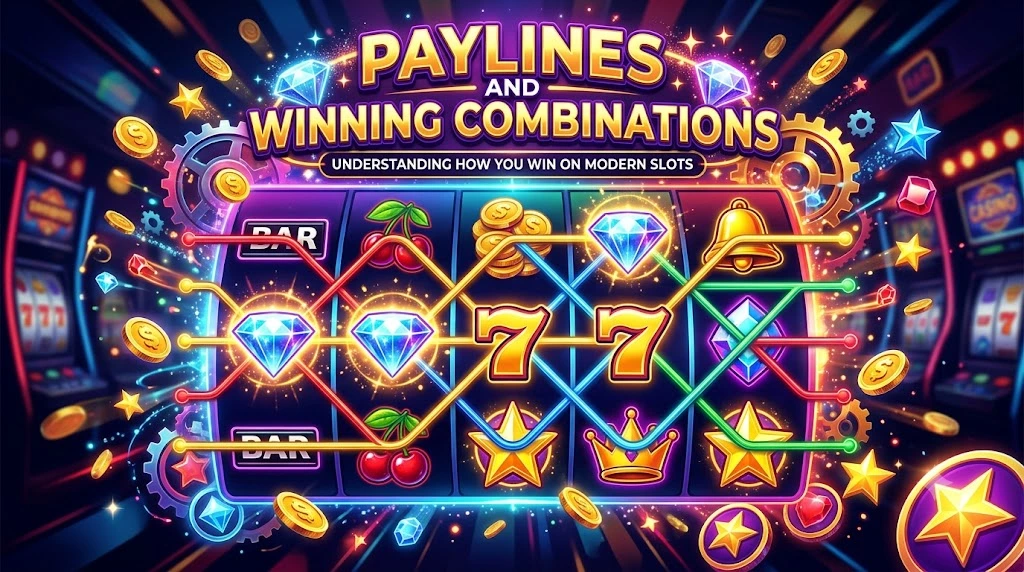
Paylines are the patterns that determine whether matching symbols create a winning combination. Traditional slot machines often had a single payline across the middle reel. Modern games may include dozens or even hundreds of paylines, while some use systems such as Megaways or cluster pays.
Common payline types include:
- Fixed paylines that remain active during every spin.
- Adjustable paylines that let players choose how many lines to activate.
- Cluster pays, where groups of matching symbols create wins.
- Ways-to-win systems that count matching symbols on adjacent reels instead of fixed lines.
Always read the game’s paytable before playing. It explains how winning combinations are formed and which symbols pay the most.
Common Slot Symbols
Every slot game has its own collection of symbols, but several appear regularly across many games.
Standard Symbols
These are the regular icons that create most winning combinations. Their value depends on the game.
Wild Symbols
Wild symbols substitute for many standard symbols to help complete winning combinations. Some games include expanding, stacked, or sticky wilds that provide additional features.
Scatter Symbols
Scatter symbols often trigger bonus rounds or free spins. Unlike standard symbols, they usually do not need to appear on a specific payline.
Bonus Symbols
Bonus symbols unlock special features such as mini-games, multipliers, or prize wheels.
Learning the purpose of each symbol helps players understand the rules before they begin.
Bonus Features in Modern Slot Games
Modern slot games include many bonus features designed to make gameplay more interactive.
Popular bonus features include:
- Free spins.
- Multipliers that increase payouts.
- Expanding wilds.
- Cascading reels.
- Pick-and-click bonus games.
- Mystery symbols.
- Locked reels.
- Bonus wheels.
- Progressive bonus rounds.
- Feature-buy options in some games.
Each game explains these features in its information or paytable section.
Progressive Jackpots Explained
Some slot games offer progressive jackpots.
Unlike fixed jackpots, progressive jackpots grow over time because a small portion of eligible wagers contributes to the prize pool.
Important facts include:
- Jackpots increase until someone wins.
- Some are shared across multiple games.
- Others exist only within a single game.
- Prize amounts can become very large.
- Jackpot rules vary between games.
Winning a progressive jackpot depends entirely on chance.
Common Myths About Slot Games
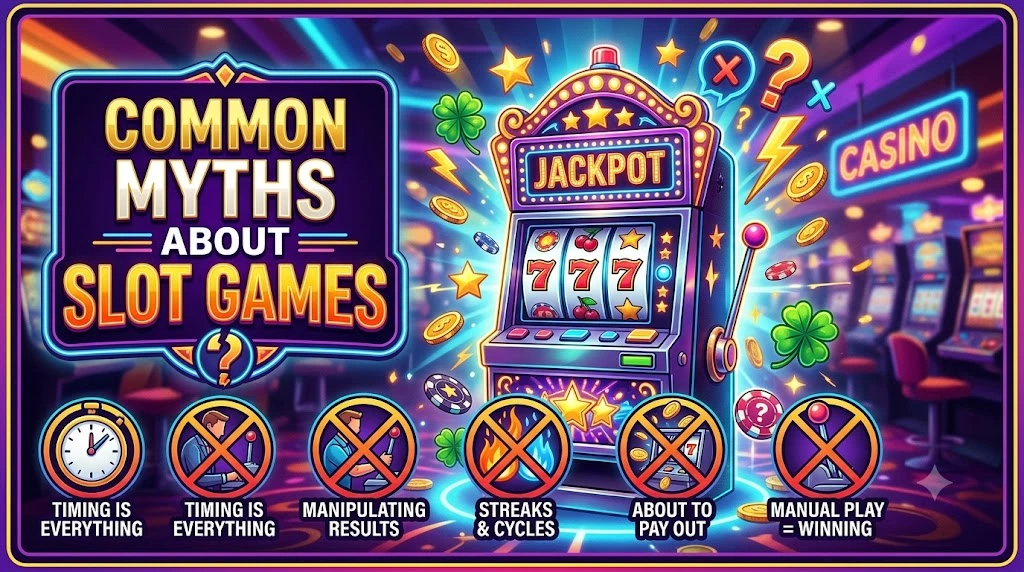
Many misconceptions surround slot games. Understanding the facts helps players make informed decisions.
Myth 1: A Machine Is Due to Pay
Each spin is random. Previous results do not influence future outcomes.
Myth 2: Playing Longer Guarantees a Win
There is no guarantee of winning regardless of how long someone plays.
Myth 3: Certain Times Increase Winning Chances
There is no evidence that specific times of day improve the odds.
Myth 4: Near Misses Mean a Win Is Coming
Near misses are simply another random outcome.
Myth 5: Betting More Changes Randomness
Changing the wager amount does not affect the randomness of the game’s results.
Understanding these myths helps players recognize how random outcomes actually work.
Responsible Gambling Practices
If someone chooses to play games that involve real money, responsible gambling is essential. The goal should always be entertainment rather than making money.
Good habits include:
- Set a budget before you start.
- Never spend money needed for essential expenses.
- Decide how much time you want to play.
- Take regular breaks.
- Avoid chasing losses.
- Do not play when feeling stressed, upset, or under the influence of alcohol or drugs.
- Understand that every outcome is random.
- Stop playing if it is no longer enjoyable.
- Use available deposit or time limits if a platform offers them.
- Seek support if gambling begins to affect your finances, relationships, or well-being.
Responsible gambling helps reduce risk and encourages healthier decision-making.
How to Evaluate a Slot Game
Before trying any slot game, take time to understand its features. Reading the game information can help you make informed choices.
Consider these factors:
- RTP (Return to Player).
- Volatility level.
- Number of paylines or ways to win.
- Bonus features.
- Free spin opportunities.
- Theme and graphics.
- Mobile compatibility.
- Game developer.
- Clear game rules.
- Fairness testing and licensing where applicable.
Learning these details helps you understand how the game works before playing.
The Future of Slot Gaming
Technology continues to shape the evolution of slot games.
Modern trends include:
- High-quality 3D graphics.
- Interactive bonus rounds.
- Mobile-first game design.
- Cross-platform compatibility.
- Virtual reality experiments.
- Augmented reality concepts.
- Personalized user interfaces.
- Improved accessibility features.
- Faster loading times.
- Enhanced security technologies.
While visuals and features continue to improve, the fundamental principle of random outcomes remains the same.
Conclusion
Understanding How Slot Games Work makes it easier to see what happens behind every spin. Although slot games look simple on the surface, they rely on several systems that control how results are generated and how wins are calculated. The random number generator (RNG) plays a key role by producing results independently for each spin. Reels, symbols, paylines, bonus features, and payout rules then determine how those results are displayed and evaluated.
Different slot games can have different themes, rules, volatility levels, and bonus features. That is why reading the paytable and game information before playing is important. It helps players understand the symbols, possible combinations, and other features without making assumptions about how the game behaves.
Most importantly, slot games are based on chance. Previous spins do not guarantee future results, and no strategy can predict the outcome of an individual spin. Understanding the mechanics can improve your knowledge of the game, but it does not remove the element of luck.
In short, learning How Slot Games Work helps you approach slot games with clearer expectations and a better understanding of their underlying mechanics.
FAQs
1. What is an RNG in slot games?
An RNG (Random Number Generator) is software that produces random outcomes for every spin, ensuring each result is independent of previous spins.
2. What does RTP mean?
RTP stands for Return to Player. It is a theoretical percentage indicating how much a game may return to players over a very large number of spins.
3. Can players predict when a slot game will pay out?
No. Modern slot games use random number technology, so future outcomes cannot be predicted.
4. What is volatility in slot games?
Volatility describes how frequently wins may occur and how large those wins tend to be. It does not guarantee any particular outcome.
5. What is the most important safety tip for players?
Treat gambling as entertainment, set clear spending and time limits, and never gamble with money you cannot afford to lose.