Chicago’s debate over video gaming reached a major turning point when the Chicago City Council approved legislation allowing video gaming terminals within city limits. The decision became part of the City’s broader 2026 revenue and budget discussions, making the chicago city council video gaming vote an important topic for businesses, residents, gaming operators, and policymakers.
The measure was approved on December 19, 2025, as part of the City’s substitute revenue ordinance. The recorded vote was 29–19, with one additional alderperson later indicating an intended no vote because of technical difficulties. The policy also created a local licensing framework with fees, operating requirements, age restrictions, and enforcement rules. Understanding the vote requires looking beyond the final tally and examining why Chicago pursued video gaming, how the rules work, and what the decision means for the city.
What Was the Chicago City Council Video Gaming Vote About.
The chicago city council video gaming vote centered on whether Chicago should permit and regulate video gaming terminals within the city. Before the policy change, Illinois already had a statewide video gaming system, but Chicago had not allowed these terminals under its local municipal framework. The City Council’s 2025 action changed that position by incorporating video gaming provisions into the municipal code.
The measure was included in the substitute 2026 Municipal Code Revenue Ordinance, rather than being treated as an isolated gaming bill. The City Council passed that ordinance on December 19, 2025, by a recorded vote of 29 alderpersons in favor and 19 against.
The decision mattered because it combined gaming policy, municipal revenue, licensing, business regulation, and enforcement. Chicago was not simply deciding whether gaming machines should exist. It was also establishing a system for licensing locations and terminals, collecting fees, monitoring compliance, and coordinating the local framework with Illinois gaming requirements.
The City later formally described the ordinance as allowing video gaming terminals in Chicago. In February 2026, the Council adopted a resolution calling on the City Clerk to provide the Illinois Gaming Board with a certified copy of the ordinance.
That sequence shows why the vote remains significant. It was the beginning of a regulatory process rather than the end of the discussion.
When Did Chicago Vote on Video Gaming.
The key Chicago City Council vote occurred on December 19, 2025. On that date, the Council considered and passed Substitute Ordinance SO2025-0021719, a broad revenue ordinance that included provisions concerning video gaming. The official proceedings show that the ordinance passed 29–19.
The timing is important because the vote occurred during Chicago’s preparation for its 2026 municipal budget. Video gaming was therefore connected to a larger conversation about city finances and new revenue sources.
The official City Council record later confirmed that SO2025-0021719 had been adopted on December 19, 2025, and that it allowed video gaming terminals within Chicago.
There was also a follow-up step in January 2026 involving the effective-date provisions of the revenue ordinance. That amendment passed the Council by a 50–0 vote on January 21, 2026.
This timeline helps separate several events that can easily become confused in online discussions. The December vote was the major policy decision. The January action addressed the ordinance’s effective-date framework, while the February action involved transmitting a certified copy to the Illinois Gaming Board.
For anyone researching the Chicago video gaming vote, checking the official legislative record is essential because headlines can simplify a complicated sequence of votes, ordinances, amendments, and administrative actions.
Why Did Chicago City Council Support Video Gaming.
Supporters viewed regulated video gaming as a potential source of municipal revenue while bringing an activity already legal elsewhere in Illinois into a controlled Chicago framework. The policy created local licensing requirements and fees that could provide the city with another revenue stream.
The decision also reflected the broader reality of Illinois gaming. Video gaming terminals have operated across the state under the Illinois Video Gaming Act, including in qualifying businesses. Chicago’s policy established its own municipal licensing and oversight requirements for terminals operating within city boundaries.
The new Chicago code requires licenses for both video gaming terminals and authorized locations. The municipal code states that a person may not own, maintain, or place a video gaming terminal in Chicago without the required state and city licenses.
That structure gives the city a direct regulatory role rather than simply allowing machines to operate under state authorization alone.
Supporters could also argue that formal regulation provides greater transparency than leaving demand to unlicensed or illegal gambling activity. A local licensing system creates identifiable operators, registered machines, enforceable rules, and penalties for violations.
However, support did not mean every alderperson agreed with the policy. The 29–19 vote demonstrates that the Council was divided. The debate involved questions about revenue, responsible gambling, enforcement, neighborhood impacts, and the relationship between video gaming and other forms of gambling.
The vote therefore represented a policy choice involving both economic opportunity and regulatory responsibility.
Why Did Some Chicago Aldermen Oppose the Vote.
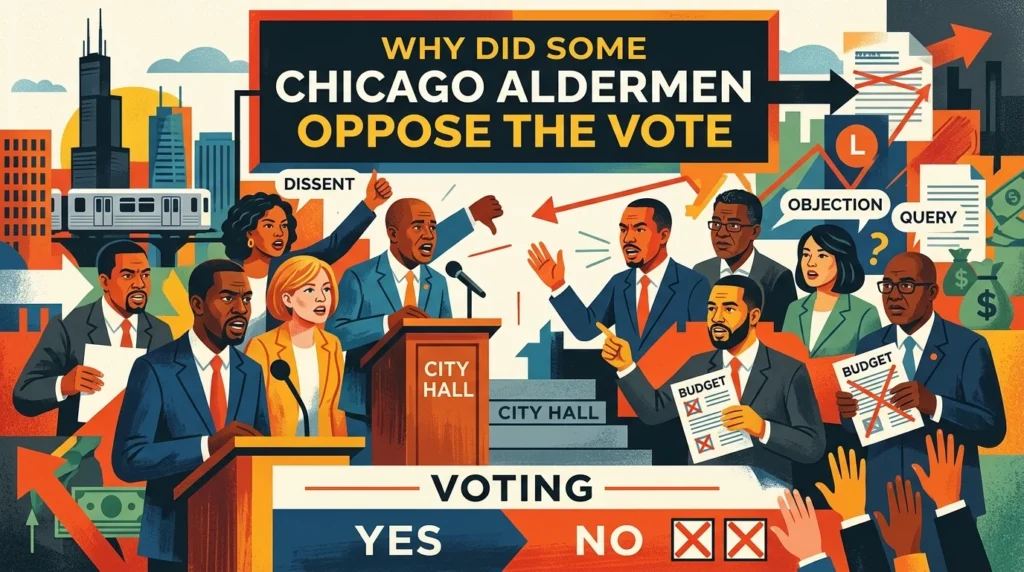
Opposition to the chicago city council video gaming vote reflected concerns about gambling expansion, public policy, enforcement, and the long-term consequences of placing gaming terminals in commercial establishments.
A 29–19 vote shows that opposition was substantial rather than symbolic. Nineteen alderpersons voted against the substitute revenue ordinance on December 19, 2025. The official record also notes that Alderperson Vasquez was unable to cast a remote vote because of technical difficulties and requested that the record reflect an intended no vote.
One concern surrounding gaming expansion is the potential effect on people who may develop problematic gambling behavior. Local policymakers can therefore face pressure to balance business and revenue interests against consumer protection.
Another issue is enforcement. Once terminals become legal, the city needs a reliable system for licensing machines, identifying approved locations, monitoring operators, and responding to violations. The municipal code addresses these responsibilities through specific licensing and compliance provisions.
Critics may also question whether additional gambling opportunities are the best way to strengthen municipal finances. A revenue source can generate money while simultaneously creating regulatory costs and social-policy concerns.
The debate is therefore more complicated than a simple pro-gambling versus anti-gambling argument. Some lawmakers may support regulated businesses but question the number of machines, locations, licensing structure, taxation, or enforcement process.
Understanding the opposition is important because it explains why the Council vote was contested and why implementation remains a subject of public interest.
How the Chicago Video Gaming Ordinance Works.
Chicago’s video gaming framework is built around licenses, approved locations, registered terminals, age restrictions, and enforcement. The municipal code establishes a dedicated Chapter 4-155 for video gaming.
A location needs the appropriate state and city authorization before video gaming terminals can be placed there. Terminal operators also need the required licenses. The city’s code specifically states that video gaming terminals may only be placed at licensed locations.
The framework also limits the number of terminals at a licensed location. Current Chicago code provides that a terminal licensee may not maintain more than six video gaming terminals at a licensed location.
Registration is another important part of the system. The city issues a registration tag for an applicable licensed terminal, and the tag must be securely attached to the machine. A terminal without the required registration tag cannot be used.
These rules create a traceable system in which the city can connect a machine to a licensed operator and location.
The ordinance also gives city officials enforcement tools. Licensees must follow state law, Chicago’s municipal code, and applicable rules from the Illinois Gaming Board and city authorities.
In practical terms, Chicago’s approach is not simply permission to install gambling machines. It is a structured regulatory system designed to identify who operates the machines, where they are located, and whether they comply with legal requirements.
What Are the Chicago Video Gaming License Requirements.
The Chicago video gaming license framework applies to both terminals and locations. The municipal code requires valid licensing before a video gaming terminal can legally operate within the city.
The ordinance established fees for video gaming location and terminal licenses. The December 2025 Journal of the Proceedings lists a location license fee of $500 plus $1,000 per video gaming terminal and a terminal license fee of $500 plus $1,000 per video gaming terminal.
These fees are important because the Chicago policy was designed partly as a municipal revenue measure. Licensing therefore serves two purposes: it establishes regulatory control and creates a source of city revenue.
Businesses cannot simply purchase a machine and begin offering video gaming. The location must qualify, the relevant state and local licenses must be in place, and the terminal must be properly registered.
The system also connects local licensing with Illinois requirements. Chicago’s code requires compliance with applicable rules issued by the Illinois Gaming Board and city authorities.
For business owners, this means the cost of entering the market includes more than buying or leasing equipment. Operators need to account for licensing, compliance, recordkeeping, location requirements, and ongoing regulatory responsibilities.
This distinction is important for anyone searching for Chicago video gaming licenses or trying to understand how the City Council vote affects local businesses. Legal authorization depends on satisfying the complete regulatory framework, not merely the passage of the ordinance.
Where Can Video Gaming Terminals Operate in Chicago.
Chicago’s video gaming rules place restrictions on where terminals may operate. The municipal code requires video gaming terminals to be located in an area restricted to people over 21 years of age. If minors can enter a licensed location, the gaming terminals must be separated from areas accessible to minors.
This requirement is intended to create a clear age boundary around gaming activity.
The rules also require supervision. Chicago’s code provides that an owner, manager, or employee who is over 21 must be present during operating hours, and the terminals or entrance to the gaming area must be visible to at least one such person.
Location eligibility also matters. A business cannot treat the ordinance as blanket permission to install machines anywhere. A location needs the necessary authorization under state law and Chicago’s local licensing framework.
The number of machines is also limited. Current municipal requirements generally restrict a licensed location to no more than six video gaming terminals.
These rules are particularly relevant for restaurants, bars, entertainment businesses, and other establishments considering video gaming.
The practical goal is to make gaming a regulated activity rather than an unrestricted feature of any commercial property. Location licensing, age separation, supervision, terminal limits, and registration work together to create that structure.
For consumers, these rules provide a basic framework for identifying lawful gaming environments. For businesses, they establish responsibilities that must be addressed before operations begin.
What Age Is Required for Chicago Video Gaming.

The Chicago video gaming framework uses 21 as the minimum age for access to video gaming terminals. The municipal code specifically prohibits location licensees from permitting people under 21 to access or play video gaming terminals.
The age requirement is reinforced by location rules. Terminals must be placed in areas restricted to people over 21, and locations that allow minors must separate the gaming area from spaces accessible to them.
This is a key part of responsible gaming regulation. It makes the legal environment different from ordinary recreational arcade gaming, where minors may commonly participate.
Businesses operating terminals are responsible for enforcing the age restriction. The code places legal duties on location licensees, meaning operators cannot simply assume customers will follow the rules voluntarily.
Age compliance also connects with broader Illinois gaming regulation. Chicago’s municipal framework operates alongside state requirements rather than replacing them.
For customers, the practical lesson is simple: being inside a business that offers video gaming does not automatically mean everyone can use the machines. Access is restricted to people who meet the legal age requirement.
For business owners, failure to enforce the age restriction can become a serious compliance issue. The city’s rules specifically identify underage use as conduct that a location licensee must prevent.
This makes age verification and proper separation of gaming areas important parts of lawful video gaming operations in Chicago.
How Many Video Gaming Machines Can a Chicago Location Have.
The Chicago municipal code limits the number of video gaming terminals at a licensed location. Under the current Chapter 4-155 rules, a location cannot have more than six video gaming terminals.
The six-terminal limit is significant because it prevents individual locations from operating an unlimited number of machines. The rule also applies to the number authorized through the licensing process.
A business must therefore keep its actual terminal count consistent with the number approved through its application and license. Installing additional machines without authorization can create a compliance violation.
The terminal limit also helps distinguish video gaming locations from larger casino-style operations. Video gaming terminals are generally integrated into qualifying businesses, while casinos operate under a separate regulatory structure.
Chicago’s code specifically requires terminal licensees to maintain no more terminals than the number included in the application and for which a license has been issued, with six serving as the maximum per licensed location.
For business owners, this means planning matters. The number of machines affects licensing costs, floor space, supervision, and potential revenue.
For residents and policymakers, the terminal cap is one mechanism for controlling the concentration of gaming devices.
The six-machine rule does not mean every licensed establishment automatically receives six machines. Authorization depends on the applicable licensing process and legal requirements. The important point is that Chicago established a clear upper limit instead of allowing unrestricted machine placement.
What Revenue Could Chicago Gain From Video Gaming.
Revenue was a central reason the chicago city council video gaming vote attracted attention. By creating local licensing requirements and fees, Chicago established a way to collect municipal revenue from video gaming activity.
The December 2025 ordinance lists separate fees for location licenses and terminal licenses. Each included a $500 base amount plus $1,000 per video gaming terminal.
The financial effect depends on the number of approved businesses, the number of terminals installed, renewal activity, and other applicable taxes or charges.
It is important, however, not to treat licensing fees as guaranteed long-term budget revenue without considering implementation and compliance costs. Municipal programs require administration, enforcement, licensing staff, and oversight.
The broader Illinois video gaming market demonstrates that the industry can operate at significant scale. A 2025 regulatory disclosure cited 8,743 licensed video gaming establishments and 49,612 video gaming terminals operating in Illinois as of December 11, 2025.
Chicago’s market would therefore enter an already established statewide ecosystem.
The city’s decision also occurred within a difficult budget environment, making additional revenue particularly attractive to policymakers. However, the long-term financial value of video gaming will depend on actual licensing participation and regulatory outcomes.
For SEO readers researching Chicago video gaming revenue, the key point is that the Council’s action created a local mechanism for collecting licensing fees while opening the door to a regulated market. The exact financial impact should be measured using official city budget documents and future revenue reports rather than early estimates alone.
What Role Does the Illinois Gaming Board Have.
The Illinois Gaming Board, commonly called the IGB, remains an important part of the regulatory picture. Chicago’s local video gaming rules do not operate independently from Illinois state law.
The city’s municipal code repeatedly requires compliance with the Illinois Video Gaming Act and applicable rules issued by the Illinois Gaming Board.
This creates a two-level regulatory structure. Chicago controls local licensing and municipal requirements, while state law and the Illinois Gaming Board provide the broader statewide regulatory framework.
The relationship became especially visible after the December 2025 City Council vote. In February 2026, the Council adopted a resolution calling for the City Clerk to provide the Illinois Gaming Board with a certified copy of SO2025-0021719, the ordinance that allowed video gaming terminals in Chicago.
That administrative step illustrates how local legalization connects to state oversight.
Businesses seeking to operate video gaming terminals therefore need to pay attention to both Chicago requirements and Illinois requirements. Meeting only one set of rules would not necessarily establish lawful operation.
This shared regulatory model can provide additional oversight, but it can also make compliance more complicated for businesses.
For consumers, the IGB’s involvement means Chicago video gaming is part of a larger state-regulated system rather than an entirely separate local gambling market.
Anyone researching the Chicago City Council gaming vote should therefore understand that the vote created a municipal framework while continuing to operate within Illinois gaming law.
What Happens If a Chicago Video Gaming Operator Breaks the Rules.
Chicago’s video gaming framework includes specific legal duties and enforcement mechanisms. Operators and locations must follow the municipal code, state law, Illinois Gaming Board rules, and lawful orders issued by regulators.
A location licensee cannot allow illegal gambling activity, underage access, unauthorized terminal use, improper payouts, or other prohibited conduct. The code also requires licensees to maintain only the number of terminals authorized by their licenses.
Registration tags provide another layer of control. A terminal must have its required registration tag, and the city can withhold a tag in certain circumstances, including when specified city taxes, interest, or penalties remain unpaid, subject to listed exceptions.
These requirements give the city tools to identify and address noncompliance.
Enforcement is important because legalization without oversight would not achieve the policy goals behind the Council’s vote. A successful system requires businesses to understand their responsibilities and regulators to apply the rules consistently.
For operators, compliance should include checking licenses, maintaining accurate records, controlling access, monitoring machines, and ensuring that terminals remain at approved locations.
For the public, enforcement provides an important safeguard. Residents should be able to distinguish legal, licensed video gaming from unauthorized machines or gambling activity.
The Chicago ordinance therefore treats regulation as an ongoing responsibility. Passing the vote was only the foundation. Effective enforcement determines whether the system works as intended.
How the Video Gaming Vote Could Affect Chicago Businesses.
The chicago city council video gaming vote could create new opportunities for eligible businesses while also adding regulatory obligations. Establishments that qualify for video gaming may gain another potential revenue source by offering licensed terminals to eligible customers.
However, businesses must consider the full cost of participation. Licensing fees, compliance requirements, terminal arrangements, space, supervision, and age restrictions all affect whether video gaming makes commercial sense.
The municipal code requires both appropriate location and terminal licensing. That means interested businesses cannot simply install machines without completing the required regulatory process.
Businesses also need to manage the gaming area carefully. Chicago requires appropriate separation from minors and supervision by an owner, manager, or employee over 21 during operating hours.
For restaurants and entertainment establishments, these rules may influence how floor space is organized.
There may also be indirect effects. Businesses that offer video gaming could attract customers who are specifically interested in gaming, potentially increasing visits. On the other hand, some customers may prefer establishments without gambling activity.
The economic outcome will therefore vary by business type, neighborhood, customer base, and operating model.
The most important point is that legalization creates an opportunity, not a guarantee of profit. Businesses must evaluate licensing costs, compliance responsibilities, customer demand, and potential reputational considerations before entering the market.
How Chicago Video Gaming Differs From Casino Gambling.
Video gaming terminals and casino gambling are related but are not identical under Illinois law. A casino is a dedicated gambling facility operating under a different licensing structure, while video gaming terminals can operate within qualifying licensed establishments under the state’s video gaming framework and Chicago’s local rules.
Chicago’s municipal code recognizes this distinction. The local video gaming licensing provisions contain exclusions for certain machines lawfully operated by casino licensees under the Illinois Gambling Act.
Video gaming locations are also subject to a six-terminal limit under Chicago’s current code.
This means the Council’s video gaming vote should not be interpreted as a decision to create another full-scale casino in Chicago.
Instead, the policy establishes a regulated system for video gaming terminals in approved locations.
The distinction matters when discussing the potential economic effects of the vote. Casinos can offer a broad range of gaming activities and operate as major destination properties. Video gaming terminals are generally distributed across participating businesses.
From a policy perspective, distributed gaming can make the activity more accessible while also creating a different set of enforcement and community considerations.
For readers searching for Chicago casino vs video gaming, the simplest explanation is that both involve regulated gambling, but they operate through different licensing structures, locations, and regulatory frameworks.
Understanding that difference prevents confusion about what the City Council actually approved.
What the Chicago Video Gaming Vote Means for Residents.
For Chicago residents, the Council’s decision means video gaming can operate within the city under a municipal licensing and regulatory framework. The policy does not mean that every business can automatically install gaming machines.
Residents may encounter video gaming in licensed locations that meet Chicago and Illinois requirements. Terminals must be placed in approved areas, access must be restricted to people 21 and older, and businesses must follow specific supervision requirements.
The vote may also influence local conversations about neighborhood development and commercial activity.
Supporters may see regulated gaming as an additional business and revenue opportunity. Opponents may focus on gambling exposure, social effects, and whether the city should rely on gaming-related revenue.
Those different perspectives are likely to remain part of public discussion as implementation develops.
Residents who want to understand the policy should distinguish between legal video gaming terminals and unauthorized gambling machines. The Chicago licensing system exists specifically to establish which operators and locations are permitted.
The most meaningful effects will become clearer over time as more businesses apply, licenses are issued, and the city publishes information about revenue and enforcement.
The December 2025 vote was therefore an important starting point, but the practical impact depends on implementation.
For residents, the biggest takeaway is that Chicago moved from prohibiting or lacking a local framework for these terminals to establishing a regulated municipal system connected to Illinois gaming law.
What Happened After the Chicago City Council Vote.
The chicago city council video gaming vote did not end the legislative process. After the December 19, 2025 passage of SO2025-0021719, the City continued taking administrative and legislative steps related to the ordinance.
In January 2026, the City Council passed an amendment concerning the effective dates of the 2026 Municipal Code Revenue Ordinance Alternative. That action passed 50–0.
In February, the Council considered Resolution R2026-0022536, which called on the City Clerk to provide the Illinois Gaming Board with a certified copy of SO2025-0021719. The resolution was adopted with 49 votes in favor and no votes against.
By June 2026, the City Clerk’s records continued to identify SO2025-0021719 as the ordinance passed by the Council on December 19, 2025, and described it as codified in the municipal code.
These developments show that implementation required more than a single Council vote.
The city had to integrate the new rules into its municipal code, coordinate with state gaming authorities, and establish the administrative framework necessary for licensing and enforcement.
There have also been additional video gaming-related proposals in 2026. For example, Ordinance O2026-0024090 concerns conditional approval of video gaming terminal licenses, while another 2026 proposal addresses restrictions involving video gaming terminals and the casino developer.
That continuing legislative activity demonstrates that Chicago’s video gaming policy remains an evolving area rather than a completely settled issue.
What Could Happen Next With Chicago Video Gaming.
The next phase of Chicago’s video gaming policy will likely focus on implementation, licensing, compliance, enforcement, and possible amendments. The Council’s decision created a framework, but practical questions remain important for businesses and residents.
One key issue is how many establishments ultimately participate. The number of licensed locations will influence the amount of gaming available across Chicago and the level of municipal licensing revenue.
Another issue is enforcement. Regulators must ensure that businesses follow age restrictions, terminal limits, registration requirements, and other operating rules.
The city may also continue considering amendments. Chicago’s 2026 legislative records already show additional proposals concerning video gaming terminal licensing and related municipal code provisions.
This means the regulatory framework can evolve as officials identify practical issues.
Public reaction may also shape future policy. Residents, business groups, gaming operators, community organizations, and policymakers can all influence discussions about where terminals should operate and how they should be regulated.
The future of Chicago video gaming will therefore depend on both market participation and government oversight.
For anyone following the Chicago City Council video gaming vote, the most useful approach is to monitor official Council records, municipal code updates, licensing information, and Illinois Gaming Board actions instead of relying only on social media summaries.
The December 2025 vote established the foundation. The effectiveness of that policy will be measured by how well Chicago manages the balance between economic opportunity, consumer protection, responsible gaming, and regulatory accountability.
Conclusion: Understanding the Chicago City Council Video Gaming Vote.
The chicago city council video gaming vote marked a major change in Chicago’s approach to regulated video gaming. On December 19, 2025, the City Council passed the substitute revenue ordinance by a 29–19 vote, incorporating provisions that allowed video gaming terminals within Chicago.
The policy established a local framework covering licensing, fees, terminal registration, age restrictions, location requirements, supervision, and enforcement. Chicago’s current code limits licensed locations to six video gaming terminals and requires compliance with both municipal rules and Illinois Gaming Board requirements.
The decision also became part of a larger discussion about municipal revenue and gambling policy. Supporters can point to regulated economic activity and new licensing revenue, while opponents can raise concerns about gambling expansion, enforcement, and community effects.
The most important lesson is that the Council vote was only the beginning. Subsequent actions in 2026 show Chicago continuing to implement and refine the policy.
As the market develops, official city records and Illinois Gaming Board information will remain the best sources for understanding licensing, enforcement, and future changes.
FAQs
Did Chicago City Council vote to allow video gaming.
Yes. The Chicago City Council passed legislation allowing video gaming terminals within Chicago as part of Substitute Ordinance SO2025-0021719 on December 19, 2025. The recorded vote was 29–19.
When did Chicago approve video gaming terminals.
The major approval occurred on December 19, 2025. The policy was included in the City’s 2026 Municipal Code Revenue Ordinance Alternative.
How many video gaming terminals can one Chicago location have.
Chicago’s current municipal code generally limits a licensed location to a maximum of six video gaming terminals. The number installed must also match the number authorized through the licensing process.
What is the legal age for video gaming in Chicago.
Video gaming terminals are restricted to people who are 21 or older. Chicago’s code prohibits location licensees from permitting people under 21 to access or play the terminals.
Does Chicago regulate video gaming separately from Illinois.
Chicago has its own municipal licensing and regulatory requirements, but those requirements operate alongside Illinois state law and Illinois Gaming Board rules. Businesses therefore need to satisfy applicable state and city requirements.