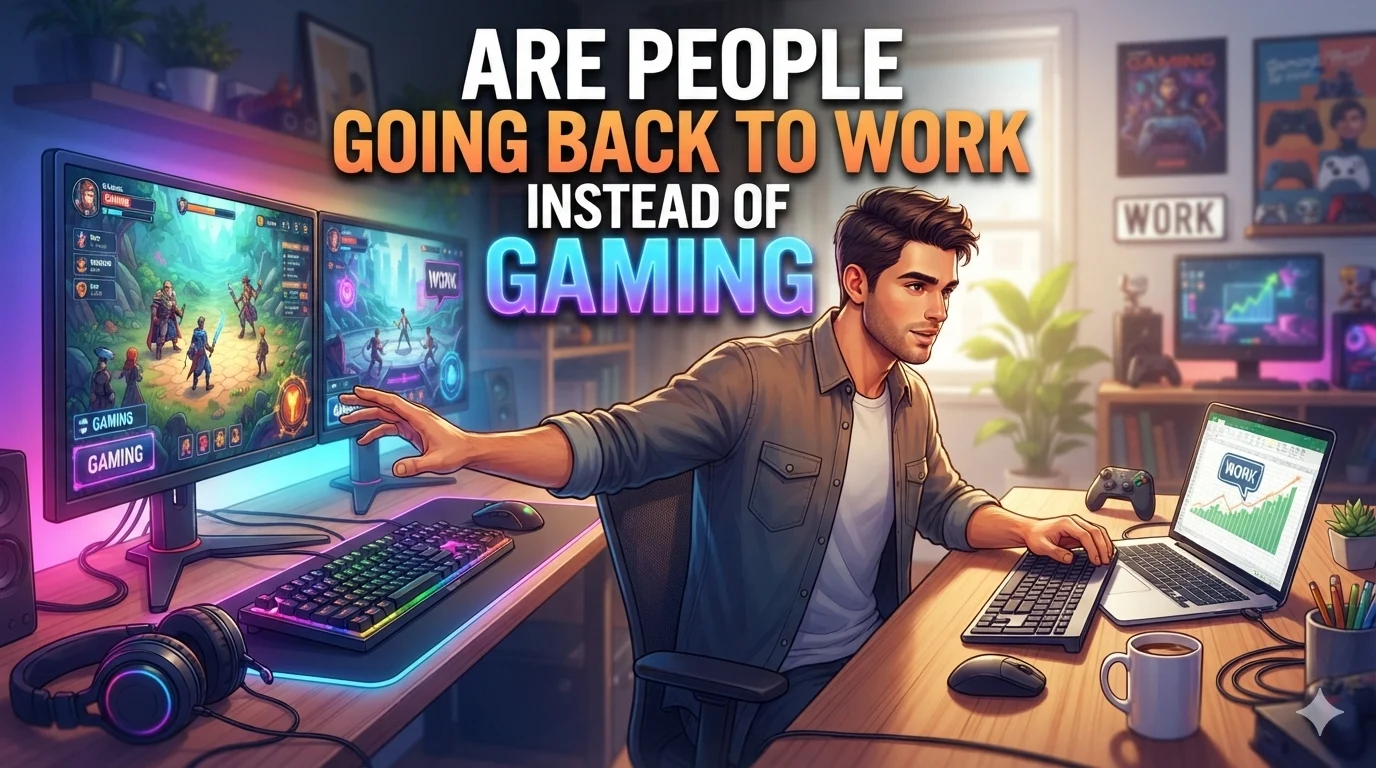
Gaming has become a major way for people to relax, connect with friends, and enjoy free time. Still, many people wonder if players are spending less time gaming and more time working. The answer is not simple. People do not all follow the same routine. Work hours, family needs, money, school, health, and personal goals can all affect gaming time.
Some people may play less when they start a new job or return to an office. Others may keep gaming but change when and how they play. Remote work can also make the line between work and free time less clear. So, are people going back to work instead of gaming? In many cases, gaming is not being replaced. Instead, people are trying to balance gaming with work and other parts of daily life.
Why People May Spend Less Time Gaming
Gaming takes time. A full gaming session can last for hours. Work can take up much of the day. After work, people also need time for meals, sleep, family, chores, and rest.
When daily duties increase, gaming may move lower on the list. This does not mean a person has stopped liking games. It may simply mean that free time has become limited.
Several changes can lead to less gaming:
- Starting a new job
- Returning to an office
- Working longer hours
- Taking care of family
- Studying or taking classes
- Building a business
- Looking for a new job
- Spending more time with friends
- Improving sleep habits
- Taking part in other hobbies
Gaming can remain part of a person’s life. The main change may be the amount of time available for it.
Work and Gaming Can Exist Together
It is easy to think of work and gaming as two choices. In real life, they do not have to compete.
A person can work during the day and play at night. Another person may play on weekends. Someone with a busy schedule may enjoy short gaming sessions instead of long ones.
The type of game can also matter. A person may choose a quick match in a multiplayer game when they have little time. Someone with more free time may prefer a long single-player game.
This creates a more flexible gaming routine.
People can also use gaming as a way to relax after work. A short session may help them switch from work mode to personal time. However, gaming should not replace sleep, work duties, or important daily tasks.
Are People Really Choosing Work Over Gaming?
There is no single answer for everyone.
Some people may reduce gaming because work has become more important. Others may have changed their gaming habits for different reasons. A person who once played every evening may now play only on weekends.
Age can also affect a person’s routine. As people take on more responsibilities, they may have less free time. Jobs, relationships, family life, and financial goals can all change how they use their free hours.
That does not mean adults stop gaming.
Many adult players continue to enjoy video games. They may simply play in a different way. Gaming can become a smaller part of the day rather than disappearing completely.
The better question is often not whether people are choosing work instead of gaming. It is whether they are finding a better balance between the two.
Why Work Can Take Priority
Work provides income and can support important life goals. For many people, earning money is a basic need.
A stable job can help pay for housing, food, education, bills, and other needs. Career growth can also become important. A person may decide to spend more time learning skills or taking on extra work.
Gaming usually does not have the same role in daily life.
Because of this, work often gets priority when time is limited. Someone may enjoy gaming but still choose to finish a work task first.
This choice does not mean gaming has lost its value. It means the person has other needs that must come first.
Returning to Office Work Can Change Gaming Habits
Remote work and office work can create very different daily routines.
When someone works from home, the workplace is close to the gaming setup. This can make gaming feel easier to access. A person may also have fewer travel hours.
Returning to an office can change that routine.
Travel may take time. Office hours may create a fixed schedule. Social contact at work can also add more activity to the day. By the time a person gets home, they may want food, rest, or sleep instead of a long gaming session.
This can lead to fewer gaming hours.
Still, the effect varies from person to person. Some office workers may game more on weekends. Others may keep their normal gaming schedule.
The Rise of Short Gaming Sessions
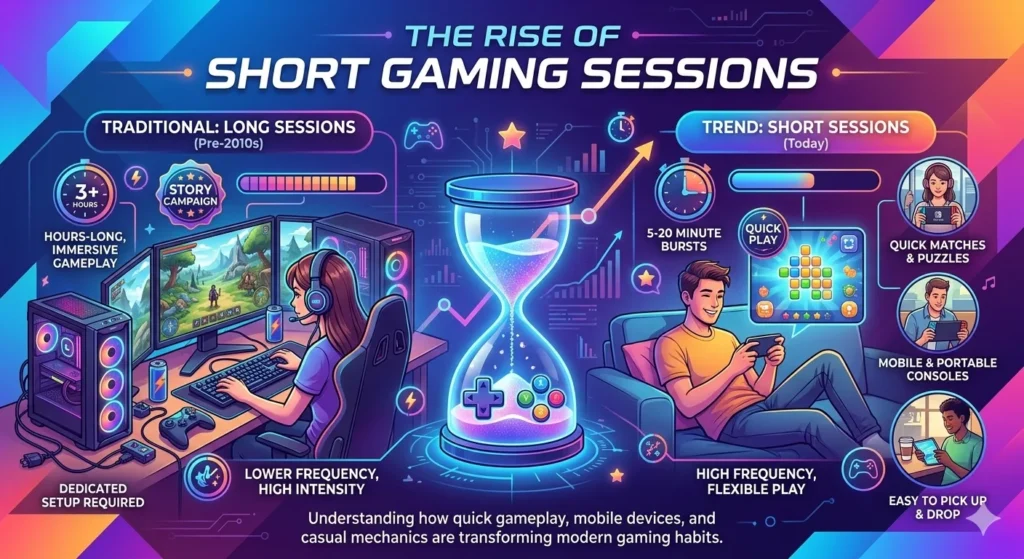
Not every player needs several hours to enjoy a game.
Short gaming sessions can fit better into a busy life. A person may play for a short period after work. Another player may complete one level or a few matches before going to bed.
Modern gaming supports many ways to play.
Players can enjoy:
- Short multiplayer matches
- Casual games
- Mobile games
- Single-player games
- Strategy games
- Racing games
- Sports games
- Cloud gaming
- Handheld gaming
Short sessions can make gaming easier to fit into a work schedule.
A busy person does not always need to choose between gaming and work. They can adjust the length of the gaming session instead.
Gaming May Become More Intentional
People with limited free time often become more selective.
A player may no longer want to spend every evening on a game. Instead, they may choose a title they truly enjoy.
This can change gaming from a daily habit into a planned activity.
For example, someone may decide to play on Friday night. Another person may reserve Sunday afternoon for gaming. Some players may only play when friends are online.
This approach can make gaming feel more valuable.
The goal is not always to play more. Sometimes the goal is to enjoy the available time.
Work Can Also Make Gaming More Enjoyable
A job can create stress. Gaming can provide a way to relax after a busy day.
That does not mean gaming is a replacement for rest. It can simply be one form of leisure.
After completing work, a player may enjoy exploring a game world, racing against friends, solving puzzles, or playing a competitive match.
The key is balance.
Too much work can lead to exhaustion. Too much gaming can reduce time for other needs. A healthy routine gives space to both work and personal activities.
Money Can Affect Gaming Choices
Financial pressure can change how people spend their free time.
A person may focus on work when money is tight. They may also delay buying new games or hardware.
Gaming does not always require expensive equipment. People can play games they already own. Free-to-play titles can also reduce the need for new purchases.
Still, major gaming upgrades can cost money. New consoles, graphics cards, gaming PCs, monitors, and accessories may not fit every budget.
When financial goals become more important, people may spend less on gaming.
Career Goals Can Reduce Gaming Time
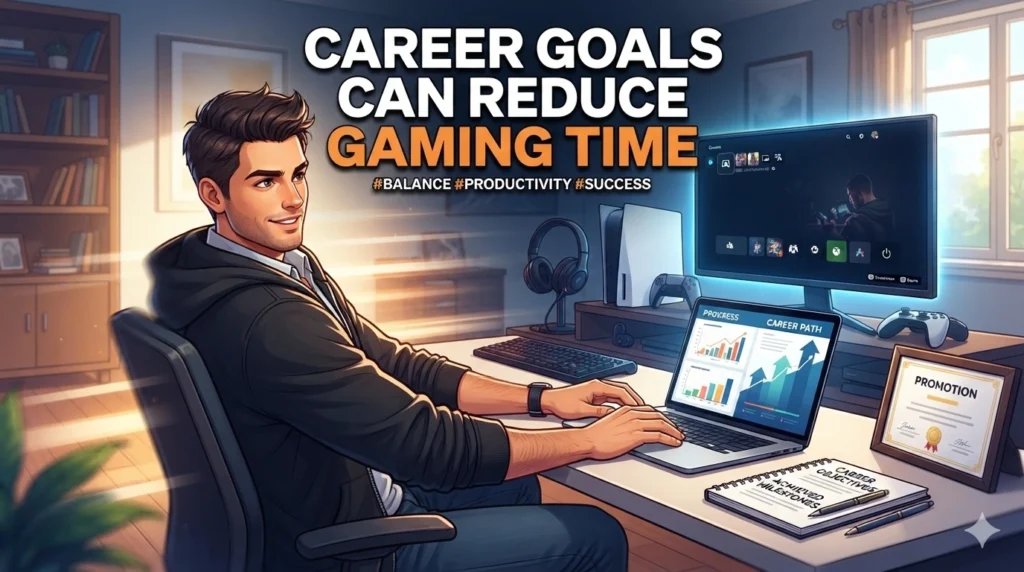
Career growth is another major factor.
A person may want to learn a new skill. They may study after work. They could also work on a side project or prepare for a better job.
These activities can take time away from gaming.
For example, someone interested in technology may spend evenings learning programming. A person building a freelance career may use free hours to find clients. Another worker may study for a professional qualification.
Gaming may still remain part of the routine. It may simply take a smaller role for a period.
Family Responsibilities Matter Too
Work is not the only reason people may game less.
Family life can take a large part of the day. Parents may spend time with children. Couples may plan activities together. People may also care for relatives or manage household tasks.
These responsibilities can reduce gaming time.
A person may still enjoy video games but choose family time first. That is a normal change in priorities.
Gaming can also become a shared activity. Some families play games together. Parents and children may use games as a way to spend time together.
In this case, gaming does not disappear. Its role changes.
Does Working Mean People Stop Being Gamers?
No.
Being a gamer does not require playing every day.
A person can play once a week and still enjoy gaming. Someone else may play every night. Both can be gamers.
The word “gamer” covers many types of players. Some people play casually. Others spend much of their free time on games. Some focus on esports. Others prefer story-based games.
Work does not remove someone’s interest in gaming.
A busy schedule can simply change gaming habits.
Remote Work and Gaming
Remote work creates a different relationship between work and gaming.
A home office and gaming setup may be in the same room. This can make gaming more convenient. Yet it can also create a problem.
Work and leisure can blend together.
A person may find it hard to fully stop working. They may check work messages after hours. They may also feel tempted to start gaming during breaks.
Good boundaries can help.
A simple routine can make the difference. Work should have a clear start and end. Gaming can then happen during planned free time.
The Role of Gaming Communities
Gaming is not only about playing a game.
Many players enjoy the social side. Friends may meet online after work. They may use voice chat while playing. Online communities can also help people stay connected.
This social role can keep gaming important even when free time becomes smaller.
A player might not have time for a three-hour session. They may still join friends for a short match.
For some people, the social connection matters as much as the game itself.
Competitive Gaming and Work
Competitive players can face a different challenge.
Training for esports or competitive play can require regular practice. A full-time job may reduce the time available for training.
Some players may decide to focus on work instead. Others may keep gaming as a serious hobby.
The choice depends on personal goals.
Competitive gaming can demand focus and time. Work may offer more stable income and structure. A player may decide that gaming is better as a hobby.
This does not mean competitive gaming has become less important to everyone. It shows that people have different priorities.
Gaming as a Hobby After Work
For many people, gaming fits naturally into the evening.
Work ends. Dinner is finished. Other tasks are done. Then the player starts a game.
This routine can be simple and enjoyable.
Gaming can offer a break from work. Story games can provide a different type of experience. Strategy games can require planning. Multiplayer games can offer social interaction.
The important point is that gaming does not need to compete with work all day.
A person can treat gaming as a hobby that begins after work is finished.
How People Can Balance Work and Gaming
A good balance starts with time.
People can decide how much gaming fits their day. There is no perfect number of hours for everyone.
A simple plan may include:
- Finish important work first.
- Set aside time for meals.
- Protect enough time for sleep.
- Complete key family duties.
- Use remaining free time for gaming or other hobbies.
- Take breaks during long gaming sessions.
This approach keeps gaming enjoyable without allowing it to control the whole schedule.
Signs That Gaming May Need Better Limits
Gaming becomes a problem when it starts to harm important parts of life.
Warning signs can include:
- Missing work tasks
- Losing sleep often
- Ignoring family duties
- Avoiding important responsibilities
- Feeling unable to stop playing
- Spending too much money on games
- Losing interest in other activities
These signs do not mean gaming itself is bad.
They show that the routine may need a change.
A person can reduce session length, set a stopping time, or move gaming to specific days. Small changes can make leisure easier to manage.
Signs That Work May Need Better Limits
Balance works both ways.
Work can also take over a person’s life. Constant work can leave little time for rest or hobbies.
Someone may need better boundaries if they:
- Work far beyond their normal schedule often
- Never take real breaks
- Check work messages during all free time
- Lose sleep because of work
- Stop doing enjoyable activities
- Feel unable to switch off after work
Gaming can be one healthy form of leisure when used in a balanced way. Other hobbies, exercise, social time, and quiet rest can also help.
Are People Gaming Less Because They Are Busy?
Busy lives can reduce gaming time.
However, less gaming does not always mean less interest. A person may still follow gaming news, watch game videos, talk with friends about games, or plan to play later.
Free time can change from week to week.
One week may be busy with work. Another week may offer more free time. Gaming habits can move with that schedule.
This is why it is hard to say that people as a whole are simply replacing gaming with work.
Individual routines are more complex.
Gaming Can Change With Life Stages
Gaming habits can change as people move through life.
A student may have a different schedule from a full-time worker. A new parent may have less free time than before. Someone starting a business may spend long hours working.
Later, the same person may have more free time again.
Games can remain part of the person’s life through these changes.
The games themselves may also change. A player might move from competitive games to casual games. Another may prefer story games because they can pause and return later.
Life changes do not always end gaming. They can change the type and amount of gaming.
Why There Is No Simple Answer
The question “are people going back to work instead of gaming” sounds like there should be one clear answer.
Real life is different.
People work for many reasons. They also game for many reasons. One person may reduce gaming because of a new job. Another may increase gaming after work because it helps them relax.
Some people may return to office work. Others may remain remote. Some may work part time. Others may study or run a business.
Gaming habits follow these different lifestyles.
It is better to view work and gaming as two parts of a person’s schedule rather than two activities that must always compete.
How Gaming Fits Into a Modern Routine
Gaming is now one of many forms of entertainment.
People also watch movies, use social media, exercise, read, travel, meet friends, and take part in hobbies.
This means gaming competes with many activities for free time.
A player may choose gaming one night and a movie the next. On another day, work may take priority.
This does not show that gaming is disappearing. It shows that people have many ways to use their free time.
What This Means for Gamers
Gamers do not need to choose one identity.
A person can be a worker and a gamer. They can be a parent and a gamer. They can study and still enjoy games.
The main goal is to create a routine that works.
A short gaming session can be enough. A weekend session may also be enough. There is no rule that says a person must play every day.
Gaming should fit into life rather than make life harder.
The Future of Work and Gaming
Work patterns will continue to change. Remote work, office work, flexible schedules, and different career paths can all affect free time.
Gaming will also continue to change.
Games are available on PCs, consoles, mobile devices, and handheld systems. Players have more ways to access games than ever.
This flexibility can help gaming fit around work.
Someone may play a quick game during a free period. Another person may enjoy longer sessions on days off.
The future is unlikely to be a simple choice between work and gaming. Both can remain important parts of modern life.
Conclusion
Are people going back to work instead of gaming? For some people, work may reduce the amount of time they spend playing games. A new job, office routine, career goal, family duty, or financial need can all change a person’s schedule. Yet this does not mean people have stopped gaming. Many players simply adjust how they play.
Gaming can remain a useful form of entertainment after work. Short sessions can fit into busy days. Longer sessions can happen on weekends or days off. The best approach is to protect important needs first, including work, sleep, family, and personal responsibilities.
There is no single gaming routine that works for everyone. Some people may play every day. Others may play once a week. Both choices are normal. In the end, work and gaming do not have to be opposites. With a good balance, people can build a routine that supports both productivity and fun.
FAQs
1. Are people going back to work instead of gaming?
Some people may spend less time gaming when they return to work or take on more responsibilities. However, this does not mean everyone is giving up gaming. Many people simply change their gaming schedule.
2. Does working full time reduce gaming time?
It can. Full-time work may take up much of the day, leaving less free time for games. Travel, family duties, meals, and sleep can reduce available gaming time even more.
3. Can people work and still be gamers?
Yes. Many people can enjoy gaming while working. They may play after work, on weekends, or during other free periods. Gaming does not require a person to be unemployed or have unlimited free time.
4. Why do some adults stop gaming as much?
Adults may have more work, family, financial, or personal responsibilities. Career goals can also take priority. Some people do not stop gaming completely. They may simply play less often or choose shorter games.
5. How can people balance work and gaming?
A simple schedule can help. Finish important work and daily duties first. Protect enough time for sleep and rest. Then set aside reasonable gaming time. Short sessions can work well when a person’s schedule is busy.