Before gaming websites, social media feeds, video platforms, and instant online updates became part of everyday life, Electronic Gaming Monthly gave players a place to discover what was happening in the video game world. Known widely as EGM, the publication became an important part of gaming culture through its news, reviews, previews, interviews, opinions, rumors, screenshots, and personality-driven editorial style.
The magazine began in the late 1980s, when information about upcoming console games was much harder to find than it is today. Over the years, EGM changed owners, formats, and publishing models while maintaining a recognizable connection with gaming history. Today, its legacy continues through online publishing and preservation projects that help modern audiences explore its extensive archive.
What Is Electronic Gaming Monthly?
Electronic Gaming Monthly, commonly called EGM, is a video game publication with a long history in gaming journalism. It originally appeared as a print magazine during the late 1980s and became known for covering console games, gaming hardware, upcoming releases, industry developments, interviews, reviews, and rumors.
The publication emerged at a time when gamers had limited ways to learn about unreleased games. There were no social media feeds delivering announcements instantly and no large collection of gaming websites providing constant updates. Magazines therefore played an important role in connecting players with developers, publishers, and the wider gaming industry. EGM’s pages combined screenshots, artwork, previews, reviews, opinions, and industry information in a format that readers could revisit whenever they wanted.
One of EGM’s most recognizable features was its editorial personality. Rather than presenting games as simple products, the magazine developed a strong voice through its writers and reviewers. Its review coverage became particularly recognizable through the Review Crew concept.
Over time, EGM expanded beyond its original magazine format. The brand has experienced multiple publishing periods, including a major revival after the original print run ended. The modern EGM identity also emphasizes digital content, original reporting, reviews, and features.
For gaming-history fans, Electronic Gaming Monthly is more than an old magazine. It represents an important stage in the development of video game journalism and enthusiast culture.
The History of Electronic Gaming Monthly
The history of Electronic Gaming Monthly reaches back to the late 1980s. Steve Harris founded the publication during a period when console gaming was growing rapidly and players wanted reliable information about new releases. EGM’s early purpose was especially valuable because gamers had far fewer sources for previews, reviews, screenshots, and industry news.
The publication’s early issues appeared through Sendai Publishing, with the Video Game History Foundation recording EGM’s main print collection beginning in May 1989. The archive describes the magazine as one of the longest-running American video game magazines and notes its strong focus on the gaming industry, news, reviews, and insider information.
EGM later became associated with Ziff Davis, which took over publication in the mid-1990s. During the following years, the magazine became one of the best-known names in American gaming media.
The original print era eventually came to an end in 2009. EGM’s founder, Steve Harris, later reacquired rights and revived the publication, beginning another print period in 2010. The second print run continued for several years before the brand moved further toward digital publishing.
This history matters because EGM survived several major changes in the gaming industry. It moved from cartridge-based console gaming to disc-based systems, online gaming, downloadable content, and eventually a digital-first media environment.
Rather than disappearing completely with the decline of traditional gaming magazines, EGM continued adapting. Its changing format reflects the broader transformation of gaming journalism itself.
Why Electronic Gaming Monthly Became Popular
Electronic Gaming Monthly became popular because it offered something gamers could not easily get elsewhere: a concentrated source of gaming information presented by people who understood the hobby.
Readers could open a single issue and find previews, reviews, news, screenshots, interviews, rumors, tips, and editorial commentary. This made the magazine especially useful before the internet became a mainstream source of gaming information.
EGM also developed a distinctive editorial personality. Its writers did not simply repeat publisher descriptions. They discussed games from a player’s perspective and often expressed clear opinions. The official EGM history describes the magazine as informative and opinionated while emphasizing its connection with the gaming community.
The magazine’s Review Crew became another major part of its identity. Multiple reviewers could provide different opinions about the same game, giving readers more context than a single score might provide. This approach encouraged discussion and made reviews feel like conversations between knowledgeable players.
EGM also benefited from timing. The late 1980s and 1990s brought rapid growth in console gaming. New systems, franchises, accessories, and publishers appeared regularly. Players wanted to know which games were worth buying and which upcoming releases deserved attention.
The physical magazine also created anticipation. Readers could receive a new issue, browse its pages, study screenshots, and discover information about games that might not arrive for months.
That combination of timely information, recognizable personalities, strong opinions, and gaming-focused coverage helped EGM establish a loyal audience.
Electronic Gaming Monthly Reviews and Review Crew
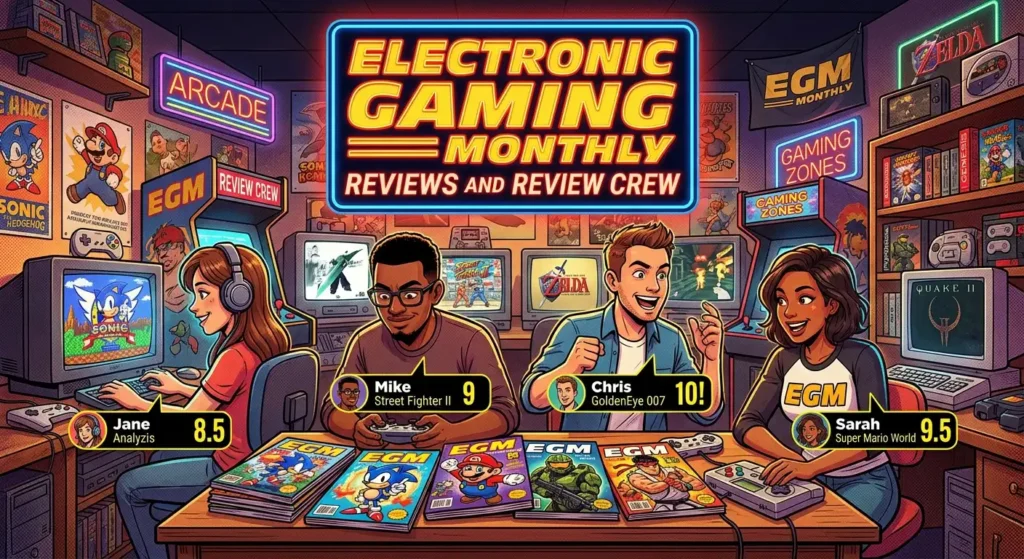
Reviews became one of the defining elements of Electronic Gaming Monthly. During the magazine’s classic era, readers often looked to EGM for opinions before spending money on a new game.
The Review Crew format gave EGM a recognizable approach. Instead of relying on a single voice, several reviewers could assess a game independently. This helped communicate an important truth about gaming: people can play the same title and have very different experiences.
A game might appeal strongly to one reviewer because of its action, graphics, soundtrack, or mechanics while another reviewer might find the same elements disappointing. Multiple scores and opinions therefore provided more context.
This approach also helped readers understand reviewer preferences. Over time, regular readers became familiar with the personalities behind the scores and could interpret reviews based on those perspectives.
The importance of EGM’s reviews went beyond individual purchasing decisions. The magazine helped establish gaming reviews as an important form of enthusiast journalism. Its reviewers discussed gameplay systems, presentation, technical performance, replay value, controls, and overall enjoyment.
Modern gaming websites have continued many of these practices. Today, players can read multiple reviews, compare scores, watch gameplay, and examine technical analysis before buying a game. EGM operated within a much more limited information environment, making its review pages especially influential for readers.
The magazine’s review history also provides an interesting window into changing standards. Graphics, loading times, control schemes, difficulty, multiplayer features, and game length have all changed dramatically.
Looking back at EGM reviews can therefore reveal not only which games were celebrated, but also how expectations around video games evolved.
Electronic Gaming Monthly News and Previews
Gaming news and previews were central to EGM’s appeal. Before instant online announcements, magazines helped players learn about games that were still months away from release.
A preview could introduce a new title through screenshots, developer comments, gameplay descriptions, and early impressions. For excited readers, these pages created anticipation and gave them something to discuss with friends.
News coverage served a similar purpose. EGM reported on publishers, hardware manufacturers, upcoming releases, industry changes, and gaming events. The magazine also became known for its rumors and insider-focused material. The Video Game History Foundation notes that EGM had a special focus on the video game industry and was often a source for insider news and rumors.
The difference between old-school magazine coverage and modern online gaming news is especially interesting. Today, an announcement can reach millions of players within minutes. During EGM’s early years, readers often had to wait for the next issue to learn about new developments.
That delay gave magazines a different editorial role. Editors had to decide which stories deserved space, while writers had to provide enough detail to make a monthly issue worthwhile.
Previews also created a historical record. Screenshots and descriptions preserved what developers were promising before a game reached stores. Comparing early previews with finished games can reveal how projects changed during development.
For modern readers, old EGM previews can therefore serve as snapshots of gaming history. They show what players expected, what publishers promoted, and how the industry presented upcoming releases.
Electronic Gaming Monthly and Gaming Culture
Electronic Gaming Monthly became part of gaming culture because it did more than report facts. It helped create a shared community around video games.
In the pre-social-media era, gamers often discovered the same information through magazines. Friends could discuss the latest issue at school, work, or a local game store. A controversial review, surprising preview, or unusual rumor could become a conversation starter.
The magazine’s humor and personality also contributed to its identity. EGM was not written like a technical manual. Its writers developed recognizable voices, jokes, opinions, and recurring features.
This personality helped readers form relationships with the publication. Instead of feeling like an anonymous catalog, EGM felt like a group of gaming enthusiasts speaking directly to other enthusiasts.
The magazine also documented the culture surrounding major console generations. Nintendo, Sega, Sony, and later Microsoft competed for players’ attention, while publishers experimented with new genres and technologies.
EGM’s pages captured this competitive atmosphere. Looking through old issues can reveal how the industry presented itself at different moments and how quickly gaming trends changed.
The magazine’s influence also extended through memorable editorial moments. Its April Fools coverage became particularly famous, including the widely remembered Sheng Long hoax connected to Street Fighter II.
For collectors and historians, this cultural role makes EGM valuable beyond its original purpose. Old issues are not simply collections of game reviews. They are artifacts that preserve the language, expectations, humor, advertising, technology, and enthusiasm of earlier gaming generations.
Electronic Gaming Monthly and Console Gaming
Console gaming was at the center of EGM’s original identity. During its early decades, the magazine primarily focused on console hardware and software, covering the systems that dominated living-room gaming.
This focus allowed EGM to follow several major generations of gaming hardware. Readers could learn about new consoles, controllers, accessories, cartridges, discs, and games while comparing competing platforms.
The magazine’s console coverage was especially useful because hardware choices were significant purchases. A new console represented a major investment for many families, and buyers wanted to know which system had the strongest games and features.
EGM’s reviews and previews helped readers understand the software libraries behind each platform. A technically impressive console meant little without games that players actually wanted to experience.
The magazine also documented the changing nature of console development. Early coverage focused on cartridge-based systems and relatively simple graphics. Later issues discussed CD technology, 3D graphics, online functionality, memory cards, motion controls, downloadable content, and increasingly sophisticated hardware.
The Video Game History Foundation’s collection preserves EGM material from multiple periods, making the publication useful for studying these transitions.
Although modern gaming journalism covers consoles alongside PC and mobile platforms, EGM’s historical console focus remains an important part of its identity.
For anyone researching gaming history, EGM offers a valuable perspective on how players experienced major hardware transitions as they happened rather than looking backward with modern knowledge.
Electronic Gaming Monthly Rumors and Industry Coverage
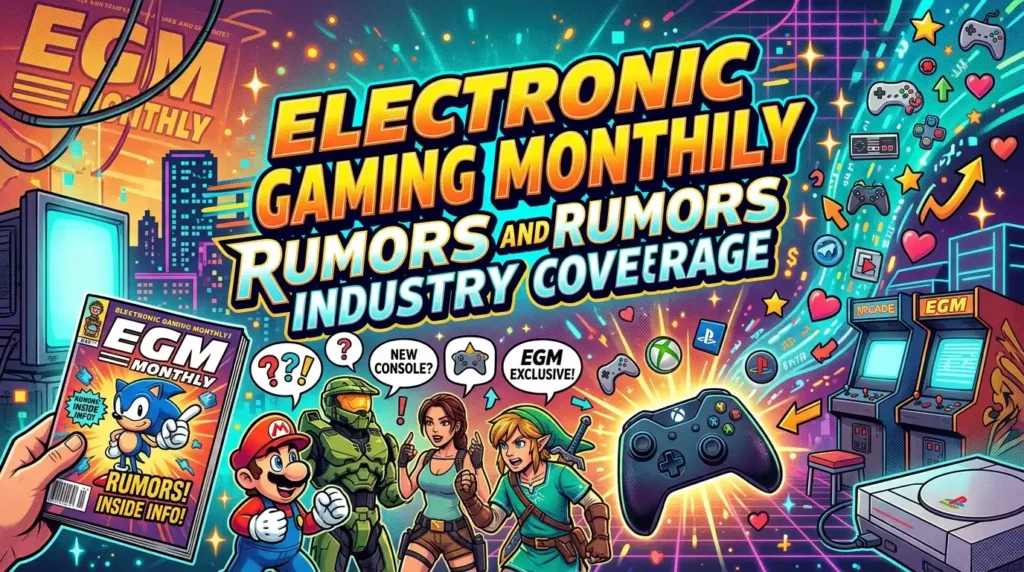
Rumors played an important role in EGM’s personality. In an era without instant social media posts, gaming rumors could generate enormous excitement because readers had fewer ways to verify them immediately.
One recognizable part of EGM’s rumor culture was Quartermann, a recurring source of industry-focused speculation. The magazine’s reputation for insider information became part of its identity and encouraged readers to follow possible developments closely.
Rumor reporting always requires caution, however. A rumor is not the same thing as confirmed news. Modern readers can use old EGM issues to see which predictions eventually became reality and which never happened.
This distinction makes historical gaming magazines particularly interesting. A preview or rumor reflects what was known or believed at the time. It should not automatically be judged using information that became available years later.
EGM’s industry coverage also extended beyond rumors. The publication reported on companies, developers, hardware manufacturers, gaming events, and broader changes affecting the business.
This gave readers a larger view of gaming. Instead of seeing games as isolated products, they could learn about the companies and people responsible for creating them.
For researchers and collectors, these pages provide evidence of how the industry communicated with its audience. They can reveal changing business strategies, platform competition, developer ambitions, and consumer expectations.
The result is a valuable historical record. Even when a rumor turned out to be incorrect, it can still tell us something about what gamers were discussing and expecting at the time.
Famous Electronic Gaming Monthly Moments
Electronic Gaming Monthly has produced or documented numerous moments that remain memorable among longtime gaming fans. Some involved major reviews, others involved unusual rumors, and some became famous because of the magazine’s humor.
The Sheng Long hoax is perhaps the most recognizable example. EGM’s April 1992 issue published a fake method for encountering Sheng Long in Street Fighter II, and the joke became widely discussed within gaming culture.
The incident demonstrates how powerful gaming magazines could be before widespread internet access. A joke printed in one publication could spread through gaming communities and become part of the mythology surrounding a popular game.
Other memorable EGM moments came from major reviews and editorial debates. Because the magazine used recognizable reviewers with different opinions, readers sometimes disagreed strongly with its conclusions.
The publication’s covers also became collectible pieces of gaming history. A cover could capture the excitement surrounding a new console, a major franchise, or an anticipated release.
EGM’s importance comes partly from this combination of serious journalism and playful gaming culture. The magazine could discuss major industry developments while also participating in the fun and humor that made gaming communities distinctive.
For modern audiences, these moments provide a glimpse into a period when gaming media had a different relationship with its readers. A magazine issue could become a physical object that players kept, shared, and revisited.
That physical connection is one reason classic EGM issues continue to interest collectors and historians today.
Electronic Gaming Monthly Collecting and Preservation
Collecting Electronic Gaming Monthly issues has become an appealing hobby for gaming-history enthusiasts. Old issues preserve information, artwork, advertisements, screenshots, reviews, and editorial material from specific moments in gaming history.
A complete collection can also show how the magazine changed over time. Covers, page layouts, logos, writing styles, advertising strategies, and review formats evolved alongside the gaming industry.
The Video Game History Foundation maintains a substantial EGM collection, including issues from the magazine’s major print periods. Its archive describes holdings covering the original run and the later revival.
Collectors often consider condition important. Clean covers, intact pages, minimal writing, and complete inserts can make physical issues more desirable. However, historical importance can matter as much as condition for certain issues.
Digital preservation has also become increasingly important. In 2026, EGM announced an official digital archive built from production files and magazine scans. The project includes hand-indexed magazine content and search features designed to help readers locate coverage of games, people, developers, and other subjects across issues.
This development changes how people can explore EGM. Instead of needing a physical collection of hundreds of magazines, readers can use digital preservation tools to investigate the publication’s history.
Preservation ensures that old gaming journalism remains accessible even as physical magazines become harder to find.
For researchers, collectors, and nostalgic gamers, EGM’s archive offers something especially valuable: a way to experience gaming history through the words and images created when those events were new.
Electronic Gaming Monthly Digital Era
The digital era changed EGM just as it changed nearly every traditional gaming publication. Readers increasingly moved from printed magazines to websites, online news, videos, social media, and digital communities.
EGM adapted by developing an online presence and later shifting toward digital-first publishing. The publication’s modern history includes a 2019 relaunch that emphasized long-form features, original reporting, and intelligent critique.
The modern approach reflects how gaming journalism has changed. A website can publish news immediately rather than waiting for a monthly printing schedule. Articles can also include multimedia, updates, links, and interactive elements that traditional magazines cannot easily provide.
At the same time, digital publishing creates a different relationship with readers. Online audiences can comment, share articles, follow writers, and receive updates throughout the day.
EGM’s digital evolution therefore represents more than a change from paper to screens. It reflects a broader transformation in how gaming information is produced and consumed.
The publication has continued to emphasize reviews, news, and feature content while preserving the editorial identity associated with the EGM name. Its official About Us page explains that the current EGM operates exclusively online and combines news and reviews with original reporting and features.
For longtime readers, the digital version offers continuity. For younger gamers, it provides an opportunity to discover a publication whose roots reach back to the early years of modern gaming journalism.
Electronic Gaming Monthly Archive and Compendium
The preservation of Electronic Gaming Monthly has entered an especially interesting phase through the EGM Digital Archive and the Electronic Gaming Monthly Compendium.
The official EGM archive describes its digital collection as a preservation project using a combination of print production files and magazine scans. It also includes an indexed database designed to make searching historical coverage easier.
This matters because EGM contains decades of gaming history. Finding a specific review or developer interview in physical magazines can be difficult, particularly for people who do not own a complete collection.
Digital indexing can make that material far more accessible. Readers can explore coverage of particular games, franchises, developers, or writers and compare how subjects appeared across different years.
The EGM Compendium adds another layer of preservation. The project is designed as a retrospective history of the magazine and its role in gaming. Its associated archive project has also expanded to include EGM² content for members.
Preservation projects like these help prevent older gaming journalism from disappearing. They also allow modern players to study how games were discussed before today’s online ecosystem existed.
For historians, the value extends beyond nostalgia. Old magazines contain primary-source material that shows what publishers promoted, what reviewers thought, what hardware was available, and what gamers expected at the time.
The archive therefore turns EGM from a collection of old magazines into a searchable research resource.
Electronic Gaming Monthly’s Influence on Gaming Journalism
Electronic Gaming Monthly helped shape the style and expectations of enthusiast gaming journalism. Its influence can be seen in the importance of reviews, previews, personality-driven writing, industry reporting, and multiple perspectives.
Modern gaming websites often use formats that feel familiar to anyone who read EGM. Reviews contain scores and detailed opinions. Previews build anticipation around upcoming games. Interviews introduce developers to audiences. News articles track companies and releases.
The major difference is speed. Modern publications can update stories within minutes, while EGM’s original monthly schedule required writers and editors to make each issue useful for weeks.
That limitation encouraged careful editorial selection. Editors had to decide what readers would still care about when the magazine reached stores or mailboxes.
EGM also demonstrated the value of personality. Readers often remember writers and reviewers rather than only article titles. This helped create loyalty and made gaming journalism feel like a community rather than a simple information service.
Its history also illustrates how gaming journalism can survive technological change. The brand moved from print to digital formats while maintaining a focus on games and players. EGM’s official history describes this evolution from print magazine to digital magazine and website.
The publication’s influence should therefore be viewed in a broader context. EGM was part of a generation of gaming magazines that helped establish gaming as a subject worthy of dedicated journalism.
Today, gamers have far more information available, but the basic desire remains the same: find trustworthy opinions, learn about upcoming games, understand the industry, and discover something exciting.
Why Electronic Gaming Monthly Still Matters Today
Electronic Gaming Monthly still matters because gaming history does not disappear simply because technology changes. The magazine provides a record of how players experienced important periods in the development of the industry.
Modern gamers can instantly access gameplay videos, developer interviews, patch notes, reviews, social media posts, and live streams. In comparison, older EGM issues show a world where information arrived more slowly and had to fit within the physical limits of a magazine.
That difference makes the publication historically valuable.
EGM also demonstrates how gaming journalism developed its own language and personality. The magazine treated games as entertainment, technology, business, and culture at the same time.
Its archives can help readers understand how major franchises were introduced, how hardware competition evolved, and how reviewers evaluated games before modern review ecosystems existed.
The current digital archive strengthens that historical value by making older material easier to explore. EGM says the archive allows users to search and track coverage of games, franchises, developers, people, and reviews across its magazine history.
For nostalgic readers, EGM can bring back memories of discovering a new game through printed screenshots or waiting for the next issue. For younger players, it offers a different perspective on the gaming industry.
Most importantly, EGM shows that gaming journalism has always been about more than scores. It is about stories, opinions, communities, technology, creativity, and the people who make and play games.
That combination is why the Electronic Gaming Monthly name continues to attract attention decades after its original launch.
Conclusion
Electronic Gaming Monthly holds a special place in the history of video game journalism. From its early print years to its later revivals and digital evolution, EGM has followed the gaming industry through enormous changes.
Its reviews, previews, news, rumors, interviews, editorial voices, and memorable moments helped create a recognizable gaming-media identity. The magazine became especially important during an era when players did not have instant access to online information.
Today, EGM remains valuable both as a continuing gaming publication and as a historical archive. The official digital preservation project makes its past easier to explore, while the Electronic Gaming Monthly Compendium adds another way to document the publication’s long journey.
For longtime gamers, EGM represents nostalgia and memories. For collectors and researchers, it represents an important historical record. For newer players, it provides a fascinating look at how gaming culture and journalism developed.
Its greatest legacy may be simple: EGM helped generations of players enjoy games more by giving them information, opinions, stories, and a sense of connection to the gaming world.
Frequently Asked Questions About Electronic Gaming Monthly
When did Electronic Gaming Monthly start?
Electronic Gaming Monthly began in the late 1980s. EGM’s official history states that Steve Harris started the magazine during that period, while the Video Game History Foundation records its main print collection beginning in May 1989.
What does EGM stand for?
EGM stands for Electronic Gaming Monthly. The abbreviation became widely associated with the gaming magazine and later its digital publishing identity.
What did Electronic Gaming Monthly cover?
EGM covered video game news, reviews, previews, interviews, industry developments, rumors, hardware, and gaming culture. Its coverage evolved as the industry changed and the publication moved between different formats.
Is Electronic Gaming Monthly still available?
The EGM brand continues online. Its current website focuses on gaming news, reviews, features, and original reporting. EGM has also launched an official digital archive that preserves and indexes its historic magazine content.
Can I read old Electronic Gaming Monthly issues online?
EGM has launched an official digital archive containing scanned and preserved magazine material. The archive is designed to make historical issues searchable and easier to explore.