The term gaming giant describes a major force in the video game industry, whether it refers to a powerful game developer, publisher, platform owner, esports organization, or technology company. Gaming giants influence how people play, buy, stream, and experience games around the world. They can shape popular genres, introduce new hardware, build huge online communities, and create some of the most recognizable gaming franchises.
From console manufacturers to PC gaming companies and mobile publishers, these industry leaders continue to push gaming forward. Understanding what makes a gaming giant successful provides useful insight into game development, business strategy, technology, community building, and digital entertainment. This guide explores the meaning, characteristics, growth, influence, and future of gaming giants in simple and practical terms.
What Does Gaming Giant Mean?
A gaming giant is a company, organization, or brand with major influence in the video game industry. The phrase does not describe one specific business. Instead, people commonly use it for organizations that achieve significant success through games, gaming hardware, digital platforms, publishing, esports, or related services.
A gaming giant usually reaches a large audience and generates substantial revenue from its products or services. Some companies become powerful because they own famous game franchises. Others build their position through consoles, PC platforms, app stores, cloud gaming, subscription services, or online marketplaces.
Size alone does not always make a company a gaming giant. Influence, innovation, brand recognition, community reach, and long-term success also matter. A smaller studio can sometimes have an enormous impact when it creates an influential game or introduces a new gameplay concept.
Gaming giants often operate across several parts of the industry. They may develop games internally, publish titles from other studios, operate digital stores, organize esports events, and provide online services. This broad presence allows them to reach players in different markets and across multiple devices.
The gaming industry changes quickly, so today’s major players must continue adapting. New technologies, changing player expectations, subscription models, mobile gaming, artificial intelligence, and cloud services are creating new opportunities. A successful gaming giant therefore needs more than money. It needs creativity, strong leadership, technical expertise, and a clear understanding of players.
How a Gaming Giant Builds Its Success
Building a gaming giant rarely happens overnight. Most successful companies grow through years of product development, strategic decisions, partnerships, and relationships with players.
One important factor is consistent game quality. Players remember companies that regularly deliver enjoyable experiences. Strong gameplay, engaging stories, polished graphics, reliable performance, and meaningful updates can turn individual games into long-lasting franchises.
Another major factor is brand identity. A recognizable gaming brand helps customers know what to expect. Companies can build trust by maintaining clear standards while still experimenting with new ideas.
Technology also plays a critical role. Gaming giants invest in powerful development tools, online infrastructure, graphics technology, artificial intelligence, and hardware. These investments can help them create experiences that smaller competitors may struggle to match.
Business diversification provides another advantage. A company that earns money from games, hardware, subscriptions, downloadable content, merchandise, and online services may have several sources of income instead of depending on one product.
Community engagement is equally important. Modern players expect developers to listen to feedback, communicate clearly, and respond to problems. Companies that build strong communities often gain loyal customers who continue supporting their products for years.
Ultimately, a gaming giant combines creative talent, technical ability, business strategy, and player trust. These elements work together to create sustainable growth rather than short-term popularity.
Major Types of Gaming Giants
The gaming industry contains several types of companies that can become gaming giants. Each type influences gaming in a different way.
Console giants focus on dedicated gaming hardware and the ecosystems surrounding it. They often control major platforms and support large libraries of first-party and third-party games.
Game publishers manage the business side of game releases. Their responsibilities may include funding development, marketing, distribution, localization, and franchise management.
Game development giants specialize primarily in creating games. Some operate many internal studios, while others work with external developers.
PC gaming companies can influence the market through digital stores, gaming hardware, graphics technology, operating systems, and online communities.
Mobile gaming giants focus on smartphones and tablets. Because billions of people use mobile devices, successful mobile publishers can reach enormous audiences.
Esports organizations represent another important category. They may operate competitive teams, tournaments, streaming channels, and gaming events.
Cloud gaming and subscription companies are also becoming increasingly important. These businesses can change how players access games by reducing dependence on traditional hardware ownership.
Some companies fit into several categories at once. A major platform owner might produce hardware, publish games, operate an online store, offer subscriptions, and manage cloud services.
This diversity shows why the term gaming giant is broader than simply a company that makes video games. It can describe an organization with significant power anywhere across the gaming ecosystem.
Gaming Giants and Popular Video Game Franchises
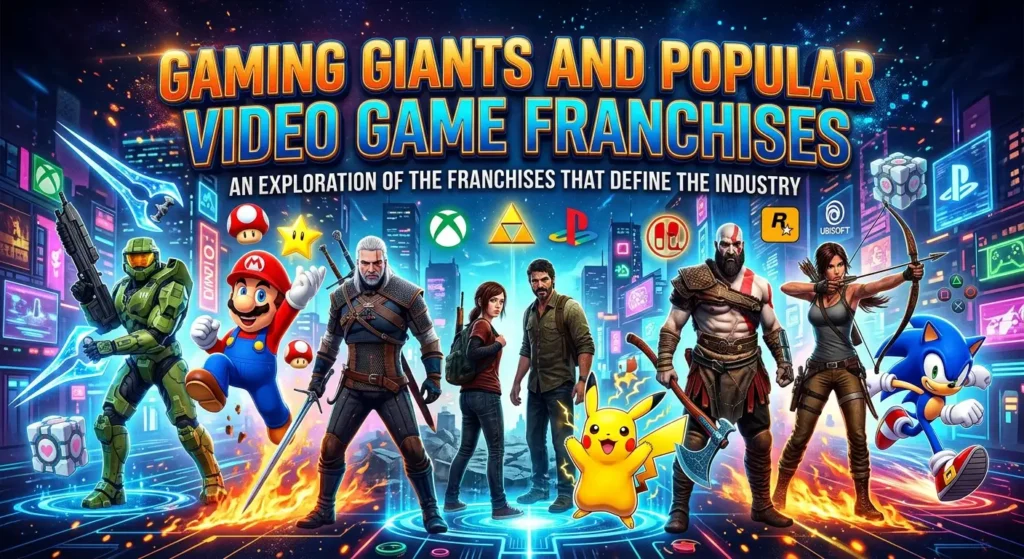
Successful franchises often provide the foundation for a gaming giant’s long-term growth. A single popular game can attract attention, but a strong franchise can remain valuable for decades.
A major franchise creates opportunities beyond the original game. Developers can release sequels, expansions, spin-offs, remasters, mobile versions, merchandise, films, television projects, and special events.
Franchises also create emotional connections with players. Gamers may associate certain characters, worlds, music, and gameplay mechanics with important moments from their lives. This emotional connection can encourage players to return when a new installment launches.
However, managing a famous franchise requires careful planning. Players usually expect improvements while still wanting familiar elements. If a company changes too much, longtime fans may become disappointed. If it changes too little, the series can feel outdated.
Gaming giants therefore spend significant resources on franchise management and player research. They analyze community feedback, sales data, gameplay trends, and market conditions before making major decisions.
A successful franchise can also help a company enter new markets. A recognizable title may attract players who have never tried the company’s other products.
The strongest gaming franchises often become cultural brands rather than simple software products. Their characters can appear in merchandise, entertainment, advertising, and social media.
For a gaming giant, protecting the quality and reputation of major franchises is therefore a long-term responsibility. Strong franchises can create stability, while poorly managed ones can damage player trust.
The Role of Technology in Gaming Giants
Technology sits at the center of modern gaming. Gaming giants continuously invest in new tools because better technology can improve graphics, performance, accessibility, connectivity, and game development.
Modern game engines allow developers to create detailed environments, realistic physics, advanced animation, and complex interactive systems. Improvements in graphics processing hardware also allow games to display more detailed worlds and sophisticated visual effects.
Artificial intelligence is becoming another important technology. Developers can use AI-assisted tools for areas such as animation, testing, procedural content, localization, and development workflows. However, responsible use remains important, especially when creative ownership and human talent are involved.
Cloud infrastructure has also changed gaming. Online services allow players to connect with friends, download content, synchronize progress, and participate in large multiplayer worlds.
Virtual reality and augmented reality provide additional opportunities. These technologies can create more immersive experiences by changing how players interact with digital environments.
Gaming giants often have an advantage because they can afford large technology investments. They can establish research teams, build development tools, and experiment with emerging technologies over long periods.
Still, technology alone does not guarantee success. Players ultimately care about the experience. A technically impressive game can fail if its gameplay lacks depth or its design ignores what players want.
The best gaming companies therefore use technology as a tool for creativity, rather than treating technology as the product itself.
Gaming Giant Influence on the Global Industry
Gaming giants have a powerful effect on the worldwide entertainment market. Their decisions can influence development practices, hardware trends, pricing models, advertising strategies, and player expectations.
When a major company introduces a successful business model, competitors often respond. Subscription services, digital downloads, seasonal content, free-to-play games, and cross-platform play have all changed the way people access games.
Large companies can also create employment opportunities for programmers, designers, artists, writers, producers, testers, marketers, community managers, and many other professionals.
Their influence extends beyond direct employment. Successful games support streamers, content creators, esports players, tournament organizers, modders, artists, and online communities.
Gaming giants can also encourage technological development. Demand for stronger graphics, faster networks, better displays, improved controllers, and high-performance computers benefits the wider technology sector.
At the same time, large companies have responsibilities. Their decisions can affect millions of players. Issues such as privacy, online safety, fair monetization, accessibility, employee working conditions, and responsible community management deserve attention.
The global influence of gaming giants therefore has both positive and challenging sides. Their resources can help create ambitious projects and new technologies, but their scale means that business decisions can have widespread consequences.
A successful industry needs innovation and competition alongside responsible leadership.
How Gaming Giants Compete for Players
Competition in gaming is intense because players have limited time and many entertainment options. Gaming giants compete through games, hardware, services, communities, pricing, and exclusive content.
One common strategy involves creating exclusive or highly distinctive experiences. A unique game can persuade players to choose one platform over another.
Companies also compete through subscription services. Instead of purchasing every game individually, players may pay a recurring fee for access to a large catalog. This model can create predictable revenue while giving players more ways to discover games.
Online communities provide another competitive advantage. Features such as friends lists, multiplayer systems, achievements, cloud saves, and social tools can encourage players to remain within an ecosystem.
Pricing also matters. Companies must balance development costs with what players consider reasonable. Discounts, bundles, free trials, and promotional events can attract new customers.
Gaming giants also compete for developers. Talented programmers, artists, designers, and producers are essential for creating successful games. Companies that offer strong creative environments and professional opportunities can attract experienced teams.
Competition can ultimately benefit players. Rival companies have incentives to improve performance, accessibility, customer service, game quality, and technology.
However, healthy competition works best when companies focus on delivering genuine value. A gaming giant cannot depend forever on brand recognition. Players have many choices, and poor experiences can quickly affect public opinion.
Gaming Giants and Esports
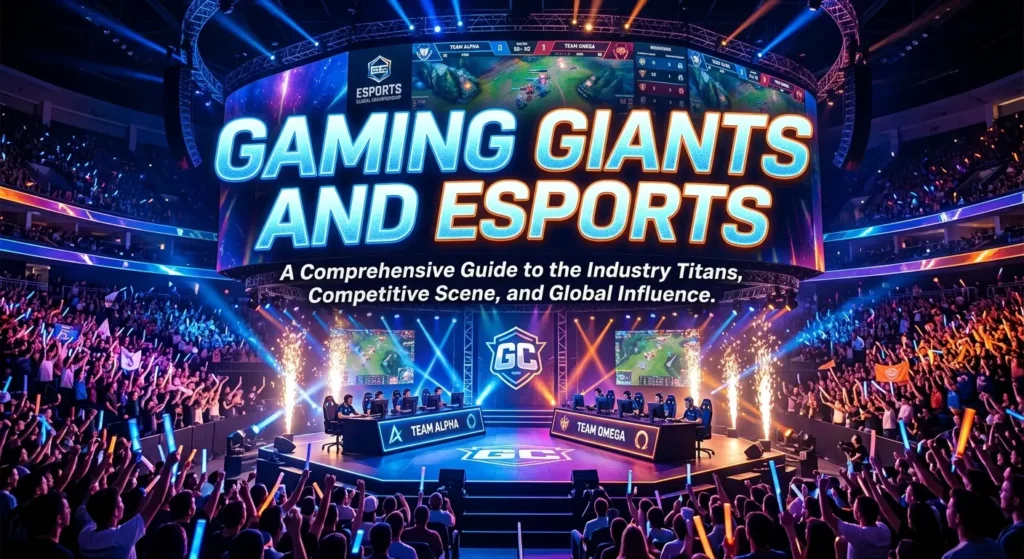
Esports has become an important part of the modern gaming ecosystem. Competitive games can attract professional players, teams, sponsors, streamers, and millions of viewers.
Gaming giants contribute to esports by creating competitive titles, operating tournaments, supporting professional leagues, and providing technical infrastructure.
A successful esports game often has several characteristics. It needs clear competitive rules, balanced gameplay, reliable online performance, and enough strategic depth to keep professional matches interesting.
Esports can also strengthen a game’s community. Players may watch professional matches to learn strategies, follow favorite teams, or simply enjoy high-level competition.
For gaming companies, esports can create additional marketing opportunities. Major tournaments generate social media discussions and keep games visible between traditional content releases.
However, esports requires long-term commitment. A company cannot simply launch a tournament and expect a sustainable competitive scene. Professional players need support, organizers need resources, and audiences need regular high-quality events.
Game balance is particularly important. Small changes to characters, weapons, maps, or abilities can affect competitive play. Developers must carefully monitor feedback and tournament performance.
Gaming giants that manage esports effectively can turn individual games into complete entertainment ecosystems. Competitive play, streaming, community events, and regular updates can keep players engaged for many years.
Gaming Giants and Online Gaming Communities
Online communities have become central to modern gaming. Players no longer experience many games alone. They communicate through voice chat, forums, social platforms, streaming services, and in-game systems.
Gaming giants recognize that strong communities can increase long-term engagement. Players who feel connected to a game are more likely to discuss it, create content, recommend it to friends, and return after major updates.
Community management therefore requires more than advertising. Companies need teams that listen to feedback, explain updates, moderate harmful behavior, and communicate during technical problems.
Transparency can make a major difference. When developers openly explain changes or acknowledge mistakes, players may be more willing to remain patient.
User-generated content is another powerful community feature. Games that allow players to create maps, characters, modifications, levels, or other experiences can develop communities that contribute directly to the game’s longevity.
Gaming giants also need to consider online safety. Harassment, cheating, scams, hate speech, and inappropriate behavior can damage communities. Effective reporting systems and moderation tools help create safer environments.
A healthy community can become one of a company’s strongest assets. It provides feedback, creativity, word-of-mouth promotion, and long-term engagement.
For this reason, modern gaming giants increasingly treat community building as part of the product rather than a separate marketing activity.
Business Models Used by Gaming Giants
Gaming companies use several business models to generate revenue. The traditional model involves selling a complete game for a fixed price. Digital distribution has made this approach easier by allowing players to purchase and download games instantly.
Free-to-play games use a different strategy. Players can access the basic experience without paying upfront, while companies generate revenue through optional purchases, expansions, cosmetics, or other services.
Subscription gaming has also grown in importance. Players pay regularly for access to game libraries, online features, discounts, or additional benefits.
Downloadable content can extend the life of a game. Developers may offer new characters, maps, story chapters, cosmetic items, or expansions after launch.
Advertising remains especially relevant in mobile gaming. Some games provide free access while generating income through advertisements.
Each model has advantages and risks. Players appreciate flexibility, but aggressive monetization can create frustration. Gaming giants therefore need to balance revenue goals with customer satisfaction.
Clear pricing and honest communication can strengthen trust. Companies that explain what players receive for their money are more likely to maintain positive relationships.
The most successful gaming businesses understand that long-term player value matters more than short-term revenue. A player who feels respected may continue purchasing products for years, while a poor monetization experience can push customers away.
Gaming Giant Innovation and New Trends
Innovation helps gaming giants remain competitive in an industry that changes rapidly. New ideas can appear in gameplay, hardware, distribution, social features, and business models.
Cloud gaming is one area attracting attention because it allows players to access games through remote servers rather than relying entirely on local hardware. Better internet infrastructure could make this approach more practical for more players.
Cross-platform gaming is another important trend. Players increasingly want to play with friends regardless of which supported device they own.
Artificial intelligence may also influence development workflows, game testing, personalization, and interactive experiences. The most useful applications will likely combine automation with human creative direction.
Accessibility is becoming increasingly important as well. Features such as customizable controls, subtitles, color options, adjustable difficulty, audio settings, and assistive technologies can help more people enjoy games.
Gaming giants are also exploring new forms of social interaction. Games increasingly function as virtual spaces where players attend events, communicate, create content, and participate in shared experiences.
Innovation does not always mean inventing something completely new. Sometimes the most valuable innovation comes from improving an existing feature.
A gaming giant that understands player needs can use emerging technology without losing sight of simple fundamentals such as fun, responsiveness, accessibility, and engaging design.
Challenges Facing Gaming Giants
Being a gaming giant brings significant challenges. Large companies face higher expectations because players expect polished products, reliable services, and strong customer support.
Development costs can become extremely high. Large games may require years of work from hundreds or thousands of professionals. Delays can therefore create major financial pressure.
Competition is another challenge. New studios can enter the market with innovative ideas, while established competitors continuously improve their products.
Player expectations also change quickly. A feature that feels exciting today may become standard tomorrow. Gaming companies must keep listening to communities and watching industry trends.
Cybersecurity is an ongoing concern. Online games and digital stores can attract hackers, scammers, and other malicious activity. Protecting accounts and personal information requires constant investment.
Employee management is also important. Creative teams need sustainable working environments, realistic schedules, and effective leadership.
Public reputation can change rapidly because gaming communities are highly active online. A controversial update, technical problem, or communication mistake can spread quickly.
The largest companies also face regulatory and legal considerations in different countries. Privacy rules, consumer protection requirements, age ratings, digital purchases, and other regulations can vary across markets.
Successful gaming giants respond to these challenges through careful planning, strong leadership, transparent communication, and continuous improvement.
What Makes a Gaming Giant Trusted?
Trust is one of the most valuable assets in gaming. Players spend money, time, and emotional energy on games, so they want companies to treat them fairly.
A trusted gaming giant usually communicates clearly. It explains major changes, acknowledges problems, and provides useful information when services experience difficulties.
Product quality also matters. Companies cannot build lasting trust if their games consistently arrive unfinished or unreliable.
Fair monetization is another important factor. Players are more comfortable spending money when pricing feels transparent and optional purchases do not unfairly damage the experience.
Privacy and account security are equally important. Gaming platforms often contain valuable personal and payment information, making responsible data protection essential.
Good customer support can further strengthen trust. Players appreciate having a clear way to report technical problems, billing issues, or account concerns.
Companies also build trust by supporting accessibility and responsible online communities. Creating inclusive experiences allows more players to participate comfortably.
Trust takes years to build but can disappear quickly. That is why gaming giants need to consider the long-term effect of their decisions rather than focusing only on immediate results.
The strongest gaming brands understand that players are not simply customers. They are members of communities that help shape the future of a game.
The Future of Gaming Giants
The future of gaming giants will likely be shaped by technology, changing player habits, and new forms of digital entertainment. Traditional consoles and PCs will remain important, but gaming will continue expanding across phones, cloud services, handheld devices, and other platforms.
Artificial intelligence could influence how games are developed and how virtual worlds respond to players. Developers may gain new tools for creating content, testing systems, and designing interactive experiences.
Cloud technology could make games more accessible by reducing the need for expensive hardware in some situations. However, internet quality, latency, pricing, and infrastructure will remain important factors.
Gaming communities are also likely to become more connected. Cross-platform systems can make it easier for friends to play together regardless of their preferred devices.
Accessibility will continue to grow as an industry priority. More customizable controls and interface options can help gaming reach broader audiences.
The business side may also continue shifting toward subscriptions, digital marketplaces, live services, and hybrid models. Companies will need to determine which approaches provide genuine value instead of simply increasing monetization.
The biggest opportunity for gaming giants may be combining technological progress with strong creative ideas. Players ultimately want memorable experiences.
Future leaders will therefore need to balance innovation, profitability, creativity, community trust, and responsible development. Companies that manage this balance effectively can remain influential even as the industry changes.
How Players Can Identify a Strong Gaming Giant
Players can evaluate a gaming giant by looking beyond advertising and company size. A recognizable name does not automatically guarantee a great experience.
Start by examining the quality of the company’s games. Look at gameplay, performance, updates, accessibility, and overall player feedback.
Consider how the company treats its community. Does it communicate during problems? Does it respond to meaningful feedback? Does it maintain effective moderation and support systems?
Pricing is another useful factor. Check whether the company offers clear information about game costs, expansions, subscriptions, and optional purchases.
Players should also consider the company’s history. A long record of successful products can provide useful context, but past success should not replace evaluation of current releases.
Technology and platform support can also matter. Players may prefer companies that support cross-play, cloud saves, accessibility features, and reliable online services.
Independent reviews and genuine player experiences can provide additional perspectives. No single review should determine a decision, so comparing several sources is usually more useful.
Ultimately, a strong gaming giant is one that consistently creates value for players. Its reputation should come from quality, innovation, reliability, and responsible business practices rather than marketing alone.
Conclusion
A gaming giant represents much more than a large company that produces video games. It can influence technology, entertainment, esports, digital communities, hardware, game development, and the business models players use every day. Successful gaming giants combine creative talent with technical innovation, strong leadership, effective business strategies, and meaningful relationships with their communities. Their influence can help introduce new experiences and expand gaming to wider audiences. At the same time, their size creates responsibilities involving quality, security, fair monetization, accessibility, and player trust. As gaming continues to evolve, the companies that remain successful will be those that understand both technology and people. The future belongs to gaming brands that can innovate while keeping the player experience at the center of everything they do.
FAQs
What is a gaming giant?
A gaming giant is a highly influential company or organization in the video game industry. It may develop games, publish titles, produce gaming hardware, operate digital platforms, or provide online services.
What makes a company a gaming giant?
Large market influence, strong revenue, popular franchises, technological capabilities, a large player base, and long-term industry impact can help establish a company as a gaming giant.
Are gaming giants only game developers?
No. Gaming giants can include game developers, publishers, console manufacturers, PC gaming platforms, mobile gaming companies, esports organizations, and other major gaming businesses.
Why are gaming giants important to the industry?
Gaming giants can influence technology, game design, business models, esports, hardware development, and player expectations. Their decisions can affect trends across the global gaming market.
What will shape the future of gaming giants?
Artificial intelligence, cloud gaming, cross-platform play, mobile gaming, accessibility, digital subscriptions, community-driven content, and new interactive technologies are likely to influence the future of major gaming companies.